Notable Things in 2025
“Keep your eye on the donut and not on the hole."
This year was a fulfilling year. I got to write, I got to start making a podcast again, and I got to connect with wonderful individuals online. One of the wildest, and probably singular to me, things to happen was a video I had made about Rogue Warrior reached the one individual it was made for: an old IGN news editor named Jim Reilly. He emailed me to provide proof of life after watching the video, which is still kind of unbelievable to me that it reached its intended audience over a year later. Responses to my sharing of the games writing resource document have been very encouraging, lots of articles and authors I never would have discovered on my own being shared with me to be added, some of which still need to be as I have been slacking. This year I continued to reach out directly to some writers I appreciate instead of remaining a silent reader, and I had probably the most heartening thing to happen this year (outside of anything with my wife and daughter) when someone reached out to me directly to share their appreciation. The kind of thing you share with your partner with a paragraph of “!!!!” attached.
I wanted to show some of my own appreciation to individuals who have touched me this past year. To Ashley Schofield for her many kind words and mentions of my writing throughout the year. To Artemis Octavio for their quality contributions to the body of games criticism through their own writing and through stopcar.ing, it is an honor to be included on the list of recommendations alongside many better websites and writers than I. Nick Cappozzoli for being willing to read and respond. To Grace Benfell for always being supportive and a great source of information and allowing me to slightly influence some Star Trek viewing. To Autumn Wright for taking the time to listen and respond and the many kind words and boosts to the work I have done. To Yussef Cole for being open to getting breakfast when he was in town and for encouraging words. To KevinM for being our consistent listener and commenting on my podcast’s usage of Billy Joel’s Root Beer Rag. To Ben Verschoor for allowing me to pitch doing a movie podcast with you and being a fantastic creative partner and patient notetaker on podcast edits. Thank you to Bullet Points Monthly1, The Imaginary Engine Review, Unwinnable, and Edwin Evans-Thirlwell for being the sources of the most consistent quality writing on the internet about videogames, this stupid form of art I can’t help but love.
Anyway I hope this year has been kind to all of those I know and care for, and if it has not, know that you have persevered despite the best efforts of your circumstances and you have won.
Videogames
This year was not one for videogames for me. I watched complete videogames more than played games to completion. Part of this is the usual time commitment games take as well as priorities shifting towards watching movies in the second half of the year with the advent of Ben Verschoor and I’s podcast Mise en Screen, which has been a rewarding exercise in film watching and film talking.
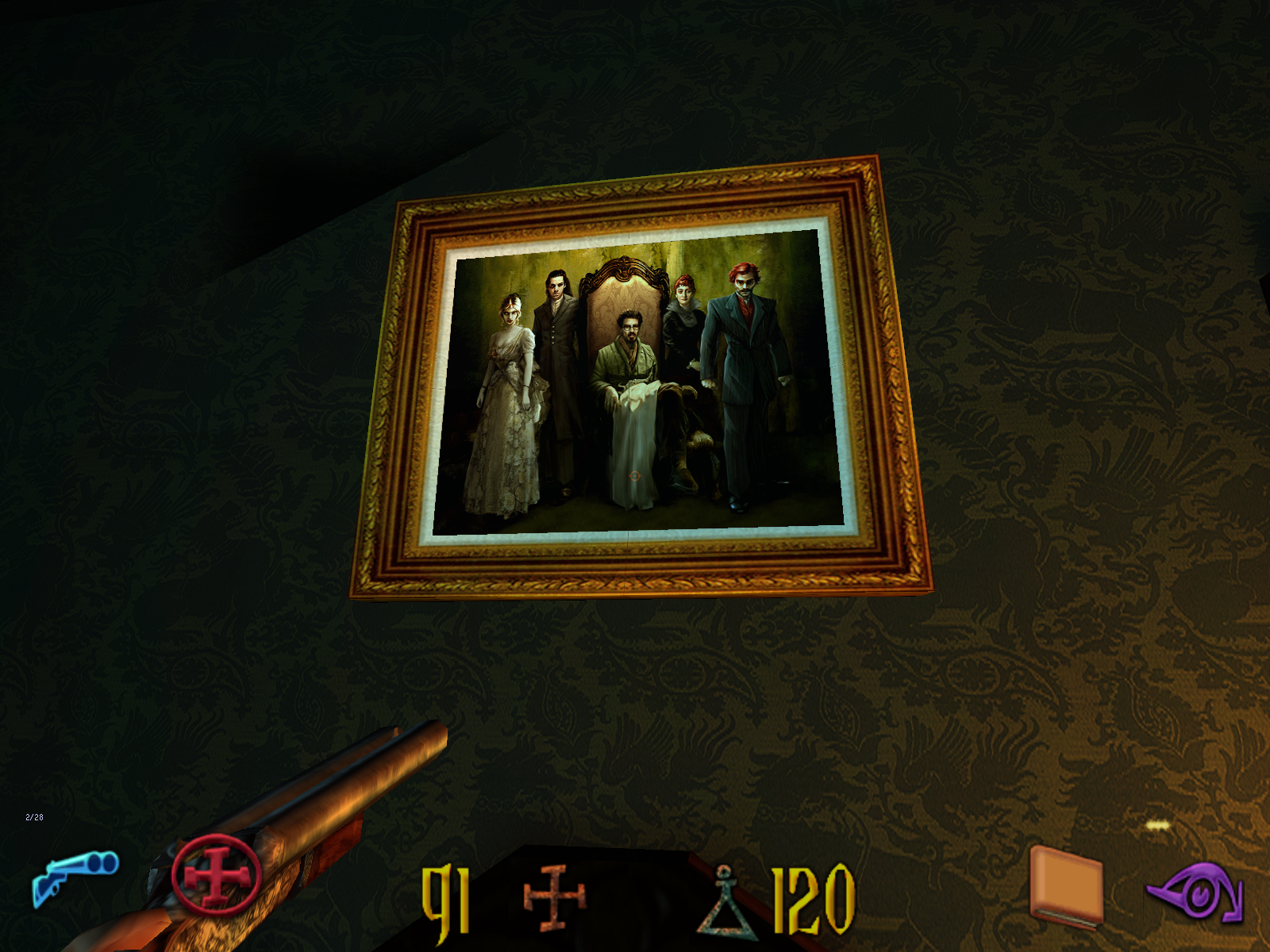
Clive Barker’s Undying (EA Los Angeles, 2001)
A morbid curiosity I have had on my mind to play ever since watching Noah Caldwell Gervais’ video on it in 2016. Undying predates BioShock 2 in terms of how it plays. You have one hand dedicated to conventional weapons: a revolver, a shotgun, speargun, unconventional weapons: a Tibetan War Cannon, Gel’ziabar Stone, and your offhand performs magic spells: Scrye, Ectoplasm, Dispel, Haste, and so on. The result of this is an immensely playable game that is very reminiscent of BioShock 2 (one of my favorites). Barker’s contribution to the character you play as, Patrick Galloway, makes him much sexier than the usual men you occupy in first person shooters who are largely either silent or and full of bravado. As a gothic horror the game gets to toy with many different kinds of enemies to shoot, and its usage of magic, especially in regards to time and dimension traveling, allows the levels you are shooting through to be more imaginative than a WW2 shooter or space opera. I enabled cheats for the final couple of levels as free time is short, but I am itching to replay this one year later.
Unrecommendable: Tom Clancy’s Splinter Cell Conviction (Ubisoft, 2010)
Bullet Points’ podcast series Small Nasty World on the Splinter Cell games had me jump back into the entry that most fascinated and disappointed me: Conviction. Playing it to completion was painful, lessened only by the brief runtime of its campaign. Impressive design flourishes: displaying objective text in-world onto buildings, skylines, and whatever surfaces may surround you, a black and white filter indicating you being hidden in the shadows, and the brutish but empty interrogation boxes, all wear out their welcome about three levels in. Plot is nonexistent, Sam is all bark, the enemies have a well deserved reputation of being talkative, and we are told what to do and expected to do it with thin reason to do so. The lone softener is the mark and execute system, wherein melee executions allow you to mark enemies and execute an instant kill cutscene. This can humorously lead to bullets penetrating concrete walls to perforate the head of a marked goon, but largely is a slick and efficient means of clearing a room. Unfortunate that latter arenas too easily devolve into open gunfights instead of procedural takedowns punctuated by the exclamation of a five round execution. This is an ugly game to look at when you begin to pay attention. It is the kind of ugly that marked this generation of consoles as one where a push for realism could not be adequately captured by developers tinkering with HD resolution output and so you have games chasing verisimilitude but only the absolutely top ones achieving the effect, leaving everyone else to look flat, bear too many right angles, and looking at anything not in your immediate vicinity reveals how fake these locations are, like a badly composited matte painting.
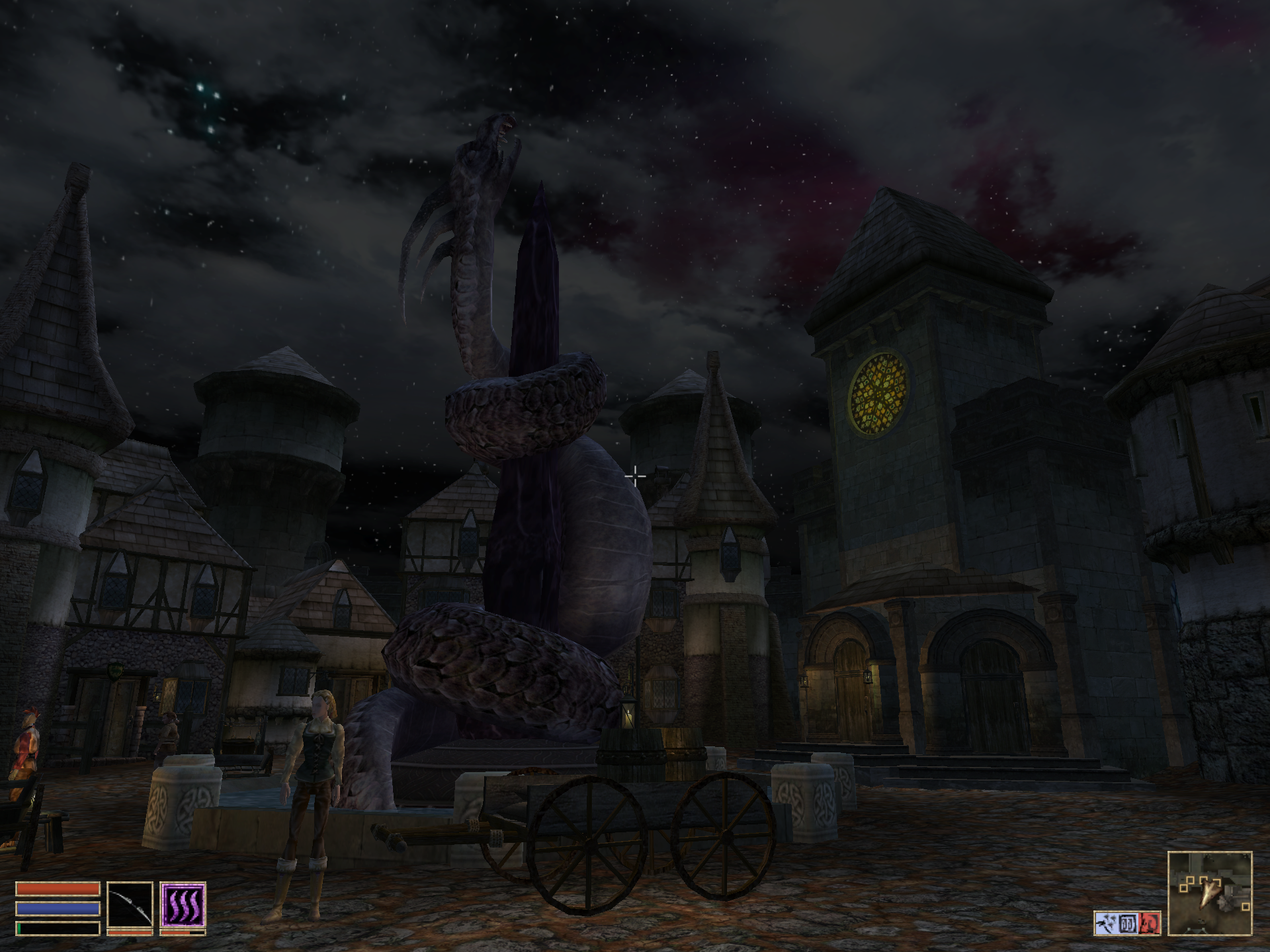
The Elder Scrolls III: Morrowind (Bethesda Game Studios, 2002) Specifically, the Tamriel Rebuilt mod
I was late to Morrowind, picking it up via the backwards compatible Xbox version in 2019 and then dipping into the PC version several years later. It was not until this year that I finally made a clean install with Tamriel Rebuild included. This massive mod seeks to add the mainland of Morrowind to the 2002 RPG, and has been released in installments since 2006. My time was spent jumping between vanilla Morrowind and Rebuilt’s additions to compare and see if there was any noticeable difference between the Bethesda developed original and the fan created additions and while I believe you would be able to consistently pick out the fan made additions on a test, I think they adhere to the spirit of the original and are only noticeable for their ambitious cities, structures, and interior designs. Quests are in line with the large swaths of the original that I have played and its additions of large swaths of land makes breaking the game over your knee via alchemy even more tempting so that you can quickly get across the water and into whatever this rich new fiction is offering.
David Lynch
The Secret Diary of Laura Palmer by Jennifer Lynch
I began this book prior to the passing of David Lynch on January 15th. Jennifer writes Laura as such a deeply tragic figure, the novel’s form allows one to deeply occupy an individual’s mind, though here we are held at a distance through the framing of a written diary. And yet reading Laura divulge her innermost thoughts and struggles and guilt and wants and pain I could only achingly wait for her predetermined end to arrive.
Twin Peaks: Fire Walk with Me (David Lynch, 1992)
I rewatched this both due to reading the Secret Diary and it being the night of January 15th. This is my favorite work Lynch has done with film. Lynch implicates everyone in Laura’s life as partially responsible for her demise, strengthening the condemnation by Bobby at her funeral in the television series. Reckoning with the loss of someone I deeply admired and know would only ever have been a stranger to me is ongoing. I believe his quote, “Keep your eye on the donut and not on the hole,” is the most beautiful encouragement he could leave us.
Science Fiction
Star Trek: Strange New Worlds Season 3
Prior to the premiere of Season 3 I finally published a piece I had been thinking about for awhile, how Strange New Worlds continues The Original Series in spirit but not in its details. Watching Season 3, I continue to mourn the loss of 26 episode seasons. Wherein we may have once received 178 episodes over 7 seasons, we now receive 50 over 5 seasons. The concentration does not help a series that seeks to recapture the whimsy of a 1960s show while also paying its dues every week to a larger serialized story. Less episodes means the weight of each is greater, causing problems when an episode that would have been just fine amongst hundreds is now further endangering a series of 30. I mostly enjoyed Season 3, though I think it is a weaker season, perhaps the weakest so far. Trelane and John de Lancie making an appearance is goofy fun, M’Benga gets to delve into his black ops past more, La’An gets to solve a murder mystery on a proto-holodeck, Kirk gets to command a ship for the first time amidst a crisis (very similar to “The Doomsday Machine”), crew members become fully Vulcan and annoy a half-Vulcan Spock, a weak morality play, a twist on TOS’ “Arena,” and a space archeology episode that flexes the weakest muscles of the season: the Korby-Chapel-Spock love triangle while simultaneously introducing a new quadrant-ending threat in the form of some space ghosts called Vezda. I think Season 3 began to push at my willingness to earnestly recommend Strange New Worlds to anyone who has enjoyed The Next Generation and especially The Original Series.
The Dispossessed: An Ambiguous Utopia by Ursula K. Le Guin
Read as part of the Superculture Discord’s book club, the future imagined by Le Guin here is beautiful and hard fought and hard maintained but successfully imagines a society untainted by greed and does the difficult work of reexamining what we take for granted through alien eyes. Shevek is an endearing character though clearly naive and corruptible by his stay on Urras, the planetoid his people left long ago in order to build a better society on its moon, Anarres. Chapters alternate back and forth linearly through two timelines with differing starting points, meaning the end culminates in one chapter ending in a departure we first read of and a return at the very end. The scientific theory that centers everything is satisfyingly in both what it is exactly and how it represents the communication and flow of ideas the entire novel spends its time amongst.
Trouble on Triton: An Ambiguous Heterotopia by Samuel R. Delany
An unusual book in that it is a response and critique to The Dispossessed. Delany writes of a man, Bron Helstrom, who cannot find satisfaction or fulfillment in a world where every desire is met and freely given to those who ask. Helstrom’s problem is an internal one, but he is incapable of evaluating his own faults and instead projects the source of his unhappiness onto others, going so far as to have a sex change because only a former man would be able to truly please a current man sexually. This concluding escapade, with latent humor, fails of course.
History
The Guns of August by Barbara W. Tuchman
The death of millions due to the petty wants of a few men. Tuchman’s portrait of August 1914 largely lays the blame for the first world war at the feet of Germany’s Emperor Kaiser Wilhelm II, an individual who is easy to hate after reading about the extensive murders of civilians in Belgium. We may have done away with monarchies but the fate of millions still remains within the power of very few individuals. It is always fascinating to read who had prescience to foresee the future others believed impossible, mostly here about how long the war would last.
Following my sojourn into the early 20th century I also discovered a history YouTuber I really enjoy, Sean Munger, who happened to have a video on both the monarchies that made up the leadership at the time of Barbara’s book and also on the July Crisis which directly preceded it. I have since watched many of his other videos that tend to focus in immense detail on otherwise overlooked subjects, periods, and locations in most of the output of US-based individuals.
I have continued my watching of Siskel & Ebert’s movie review show, I am in early 1990 as of this writing, and this is a nice recapping of both of their lives and the show so far. It also contains this great piece of critique of the Hollywood system, “Of all the issues we covered the biggest one and it remains so today is the one we talked about earlier Hollywood’s homerun mentality. Their inability to make a small movie. Everyone is trying to make the next Star Wars, which means they are second guessing what the audience wants to see instead of making the film they want to see.” Paired with another quote I had pulled last year about the persistence of sequels and remakes in 1976 shows that time is truly a circle.
I watched this on a complete whim after reading about Allan Carr’s attempt to transition the show into something more entertaining, which was widely panned and ended his career in Hollywood though he continued to work in Broadway. Watching the show itself after reading its backlash it seems rather tame, though it was 1989 and sensibilities have greatly changed since then. I think it is still an interesting oddity worth watching as a transition piece from Old to New Hollywood, coming after most of the 1980s, a decade we can more directly blame for our current state of filmmaking more than any other.
Religion
Go Tell It on the Mountain by James Baldwin & Gilead by Marilynne Robinson
I grew up deeply embedded in an Evangelical church but left the faith around 19 or 20. Bible verses and gospel songs still spring up in my mind regularly all these years later. Both of these books deal with religious families who live out the same Word very differently. The father in Go Tell It on the Mountain is hypocritical, unrepentant, and terrorizes his family with religion. Meanwhile the father in Gilead is quiet, watchful, observant, and reflective on a long life. Both fall for a woman who entered their lives during a sermon. Both remind me of the potential that lies within a life lived for God, one true, one false. The false one mostly pains me in how futile it can be to argue against or try to change them, the snake wiggles out of any grasp with their words that blacken the Text. The true one reminds me of how each of us hold so many memories, thoughts, opinions, beliefs, ideas, a majority of which will die with us and never be passed on, how we ourselves will cease to be once those who knew us have passed along after us.
Noir
The Postman Always Rings Twice by James M. Cain
They Shoot Horses, Don’t They? By Horace McCoy
Thieves Like Us by Edward Anderson
Each of these are classic noirs and also sharp tragedies of lovers, or in the case of Horses, dance partners, finding nothing but death and poverty awaiting them as the US languished in the Great Depression.
Clandestine by James Ellroy
Ellroy’s second novel follows Fred Underhill who retains the autobiographical element of playing golf and peeping and goes about to solve the murder of Ellroy’s mother. The initial murder already bore similarities to his mother, but the second one in the latter half of the book is 1:1 a recreation of the circumstances of his mother’s murder. Jean Ellroy’s murder haunts everything Ellroy has ever written, but I was still a bit taken aback at how directly he incorporates it into his story here, where Underhill solves the case and finds that the father did it, as well as having masterminded many other crimes, including the forced sterilization of many women in Milwaukee. Ellroy’s father was long dead by the time this was written, and Ellroy’s stand in is referred to as “poison” due to his father’s influence. Ellroy appears to be trying to expunge some feelings he harbored for awhile here, trying to express the tragedy of his mother’s death for others, frustration with the lack of success by his father, and self-pity at his youthful rebellions as being the natural reaction of his surroundings. Ellroy ends the novel with his stand in being taken in by Underhill and his wife to a happily ever after Ellroy never even had a chance at having.
Unreccomendable: End of the World and Hard Boiled Wonderland by Haruki Murakami
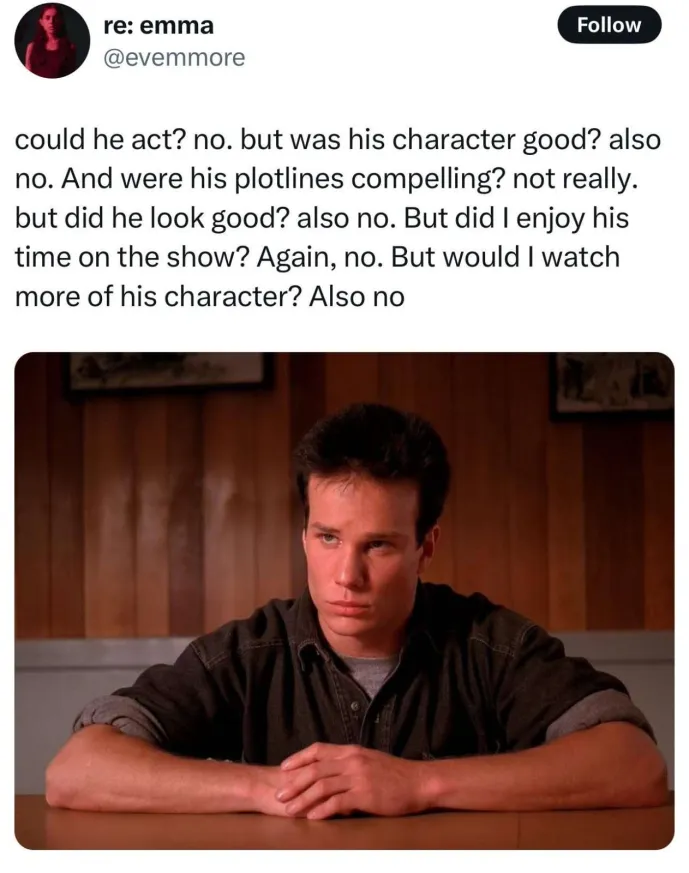
Another book club book, and the worst read this year. Murakami’s writing on women is charitably odd and damning of the entire enterprise depending on your tastes. I fall into the latter portion. The summation of my feelings was stolen from a James in Twin Peaks meme and pasted here:
did he have good prose? no. but were his characters good? also no. and were his plotlines compelling? not really. but did he have strong development? also no. but did I enjoy his time stating the name of movies, music, and books? again, no. but would I read this book again? also no. but was she fat? yes.
The Long Goodbye (Robert Altman, 1973)
If there was to be one work from this year that will forever remain on my mind as an indelible memory of enjoyment and artistic euphoria like Picnic at Hanging Rock was last year, it would be Robert Altman’s The Long Goodbye. Watched somewhat on a whim while browsing the “Leaving Soon” tab of the Criterion Channel, I had Altman on the mind for most of the year due to his Thieves Like Us adaptation being a “to watch” as part of an outline of a draft in my head regarding adaptations. The Long Goodbye’s Philip Marlowe as played by Elliot Gould (an Anthony Bourdain lookalike if there ever was one, or maybe the other way around) immediately establishes himself as an endearing figure due to his treatment of his cat. This cat is hungry but will only eat a very specific brand of cat food, one the local market just happens to be out of. So Marlowe locks her out of the kitchen while he cleverly transfers the contents of a bland brand into the name brand can, then proceeds to show the cat him emptying the name brand can into its bowl only for the cat to get angry and run away from home. The rest of the film is Marlowe sleepily, drunkenly, laissez faire-ly drifting amidst a grander conspiracy wherein his trust in a so-called friend nearly kills him and concludes on perhaps the best noir ending I’ve read or seen. I particularly was taken with the variation on the theme song, “The Long Goodbye,” composed by John Williams and Johnny Mercer, which shadows Marlowe in so many different forms from a fuzzy supermarket tune to a doorbell jingle.
The Third Man (Carol Reed, 1949)
Orson Welles is such a self-conscious actor where it works in his favor. That smirk when he enters the film tells you he knows you have been waiting for his face since you first saw his name during the opening credits. He is such a talent too that his ten minutes of screentime in a 104 minute picture leaves an indelible mark upon your memory. The Third Man does not exist without Henry Lime, and Henry Lime would likely not exist in this eternal form were it not for Welles and his contribution of dialogue that punctuates the scene on the ferris wheel.
Contemporary Film
Asteroid City (Wes Anderson, 2023)
I have probably not stopped thinking about this specific scene from Asteroid City since first watching it. Actors frequently break containment, stepping over from one framing into another: Bryan Cranston shows up within the “film” portion we are watching, really a televised performance of a stage play, wherein the performance has color and the backstage is in black and white to indicate both attention and mark difference, and realizes he’s not in this scene while the other actors confusing glance over. This spiral of who is who playing who and how they change depending on their surroundings is a brainteaser that begets a similar pleasure to pursuing the chain of questions and logic within Alan Wake’s fiction. Schwartmann departing the stage to confront Adrien Brody about his character, about the meaning of the play, is an existential question and non-answer that reflects our own life. At times I don’t understand what the point of this life is, we have so much wrong, hurtful, and evil in this world we have all agreed to participate in and we could so easily choose to change things. Having a child has changed this to where now my life is mainly concerned with ensuring her success supersedes what I myself have.
The Boy and the Heron (Hayao Miyazaki, 2023)
As part of my podcast with Ben Verschoor, I finally watched The Boy and the Heron, the latest film from director Hayao Miyazaki and Studio Ghibli. I was quite taken by its mythical visuals and dreamlike wanderings in its Other World, but was perplexed by the insinuation in its ending about blocks being infused with malice. Autumn Wright pointed me towards Jay Castello’s video on the subject which also led me to Castello’s channel at-large. It also had the happy side effect of inspiring Autumn to expand on and write on her own interpretation of the same scene and dialogue.
Reading The Boy and the Heron | Autumn Wright
One Battle After Another (Paul Thomas Anderson, 2025)
This Is What It’s Like Now: On “One Battle After Another”
I was already a Sam Bodrojan fan but I feel like this, and her writing on Marty Supreme, is the kind of work that you read and maps out 1:1 your own feelings on the same work in ways you can never hope to match in terms of composition and flow of ideas from mind to text.
Unreccomendable: Highest 2 Lowest (Spike Lee, 2025)
Ben Verschoor and I already have an extended episode on this as well as the film it is taking from: High and Low by Akira Kurosawa. Reducing it down: Spike Lee should be embarrassed attempting to remake High and Low but allowing Denzel’s character to walk away from the situation without nary a consequence.
Die My Love (Lynne Ramsay, 2025)
The kind of film that sticks with you, reveling in its specific scenes and spiraling mental state of Jennifer Lawrence, the inability and unwillingness of those surrounding her to extend any helping hand save for her mother-in-law, suffering from her own loss of self through the loss of her partner. The kind of film that makes you apologize to your wife for your insufficiencies post-partum.
Sight and Sound The Greatest Films of All Time
Jeanne Dielman, 23, quai du Commerce, 1080 Bruxelles (Chantal Akerman, 1975)
Tokyo Story (Yasujirō Ozu, 1953)
Citizen Kane (Orson Welles, 1941) (A Boy’s Life | Russell Baker | The New York Review of Books)
High and Low (Akira Kurosawa, 1963)
Black Narcissus (Michael Powell and Emeric Pressburger, 1947)
The Red Shoes (Michael Powell and Emeric Pressburger, 1948)
My new year’s resolution this year was to watch Classics, guided by the latest Sight and Sound poll and it has certainly been a treat each time. Despite the large stature these films and their reputations present I was consistently surprised by just how good they are. I think special attention is paid to Citizen Kane, probably the most hyped of all films, whose revolutions may have ebbed since 1941 but is no less entertaining thanks to the brilliance of Welles.
Video Essays (Videogames)
It was watching this video that the talented mrxbas showed me how you can create a thrilling narrative out of a gimmicky premise. I am not a car person, but I was gripped by the struggles and strategies and performance on display.
Warlockracy is one of my favorite YouTubers, and his videos on Tamriel Rebuilt are always a treat and a great motivation to get back into my own character’s adventure.
Mandalore’s videos are the best of the traditional graphics/story/sound/gameplay format, and it is applied here to one of my favorite bad games.
When I said Mandalore’s videos are the best of that format, I meant in the short form field (his videos rarely surpass an hour), but Grimbeard is the best when it comes to the longer form of video that so dominates YouTube these years. His skits are very funny, his picks are often not the usual mainstream successes, and I regularly rewatch my favorites.
My YouTube year in review was dominated by the usual ASMR (more on that later) but the lone video game channel was Civvie 11 who I think I binged most of during the year. Like Grimbeard, his skits, largely centering on his torture while imprisoned, are very funny, and I also enjoy vicariously playing the endless boomer shooters he specializes in covering, especially Monolith’s work.
Tim Roger’s highly divisive and very very very long awaited video on L.A. Noire, a longtime favorite of mine, was… just okay. Tim has tightly held beliefs regarding himself and his work, but this is largely a narrated let’s play whose insights are blunted by the lengthy vocal fry narration you have to get through to find them.
Noah remains the best to ever do it in terms of writing about games. His simple video editing and lengthy timestamps (always built up to be more than they actually are given the multiple games covered in each video) betrays the craft and thought he puts into his sentences. There were multiple moments where Noah would say something and I’d get mad at him because I will never be able to communicate with such prose. It was also nice to watch as he slowly realized how much the original Alan Wake has grown on him over time, one-of-us! one-of-us!
Video Essays (the rest)
Billiam is responsible for the resurgence of Chili’s attendance in my household.
Just an enjoyable overview of Once Upon a Time in Wonderland, please watch it.
I have been a Sherlock Holmes guy since high school and Psych was always one of my favorite interpretations of the character (after I got over my House phase) and this was a really fun refresher on that series that I am still meaning to start rewatching.
Defunctland is the best to ever do it. “My boy Nemo,” has become a regularly spoken phrase in my house.
ASMR
ASMR still dominates my YouTube watch history (either you are bought in or think it is weird) but Goodnight Moon’s Handmaiden video is now three years old and yet still my most consistently rewatched video. Alwaysslightlysleepy has become my most recent go-to and her collaborations with Goodnight Moon are always such a pleasure.
Comedy
Eric Stiffler’s Pretty Much It was a new addition to my subscriptions this year and I had a very fun time binging a lot of his commentary track highlights, I think Les Mis, The Greatest Showman, and the most recent Jurassic Park film videos had me laughing the hardest at their bits.
Having been watching Siskel & Ebert for a few years now I really appreciated how well done these impressions are and how off the rails they get to where I was actively questioning which films and opinions were real and which were just a goof, really good stuff.
Thanks to Yussef Cole for exposing me to this skit which has become a regular rotation for whenever I need a laugh. “Nobody knows,” has also been added to my regular vocabulary.
Writing about writing
It’s So Fucking Easy to Have Standards by Will Borger
Why BDS Is Calling for an Xbox Boycott by Grace Benfell
Games Media Can’t Ignore BDS Xbox Boycott by Autumn Wright
Reviewer 2’s Review of Red Dead’s History by Robert Whitaker
Abundance Reigns! By Nick Capozzoli
Games Criticism Isn’t Dead, But That Doesn’t Mean It Can’t Get Worse by Grace Benfell
I have already written a bunch about games media this year (critics love nothing more than writing about criticism continues to hold true) and don’t want to belabour the points made by myself and others already. This was a greatly disappointing year in terms of organizations I want to believe in letting me down.
Death
Remembering Leif Johnson, the gaming industry’s one and only cowboy poet | PC Gamer
I did not know Leif personally, we might have communicated once over Twitter when that was a usable website, but I followed his career for an extended period of time and the loss feels much like I have written previously about the loss of Olivier Prud’homme, gixG17, in that here was someone I wish I could have known better and embraced as a fellow human.
A Cook’s Tour by Anthony Bourdain
Bourdain is another person I never knew and never would know personally yet I still feel the occasional pang of pain thinking how he is no longer with us. His voice was so clear, so distinct, so perfectly his own. Reading his words I can hear him speaking them aloud thanks to the countless hours watching his various travel shows throughout my life. It is painful to recognize that even his life, of traveling around the world, connecting with people through food, is one I am immensely jealous of, but was not enough on its own to make him fulfilled.
Criticism
Alien Minds by Asher Elbein
A wonderful write up about the central figure in Peele’s triumphant return after a weak outing in Us.
Shining A Flashlight Through Your Cheek by Sam Bodrojan
Another Sam banger.
Red Dead Redemption, Reviewed by Matt Margini
An old Kill Screen review from Matt Margini, who went on to write a whole book about Red Dead Redemption, remains a solid and worthwhile read so many years later.
Your Thirst Is Mine, My Water Is Yours. by Artemis Octavio
The first article I had ever read from Stop Caring and specifically Artemis Octavio which introduced them and their website into my life which has been a very fulfilling source of good writing this past year. Much like Sam, reading this was like finding someone else so alike and putting words to things I only understood as vague feelings.
The fantasy of playing Final Fantasy by Joseph Earl Thomas
I mainly appreciated this as an alternative approach to the practice of writing about videogames. It is much more literary minded than a typical review or opinion piece.
Disco Elysium
A Spectre is Haunting Martinaise — Detective Fiction and Disco Elysium’s Disappointing Ending by PJ Judge
A Storm Is Blowing from Paradise: Disco Elysium on the Past and Present by Alastair Hadden
As I have been replaying Disco Elysium on my phone thanks to the mobile version (it’s pretty good, though the railroading due to the narrative and world being broken into separate levels can be annoying when I wanna do something different) had me rereading the two best pieces of writing I have yet encountered for a wonderful game that has become tied with Pentiment as my #1.
I have not mentioned this anywhere before but it was a big highlight in late 2024 when Astrid linked to something I had written in her writeup. ↩