On Cities in Videogames
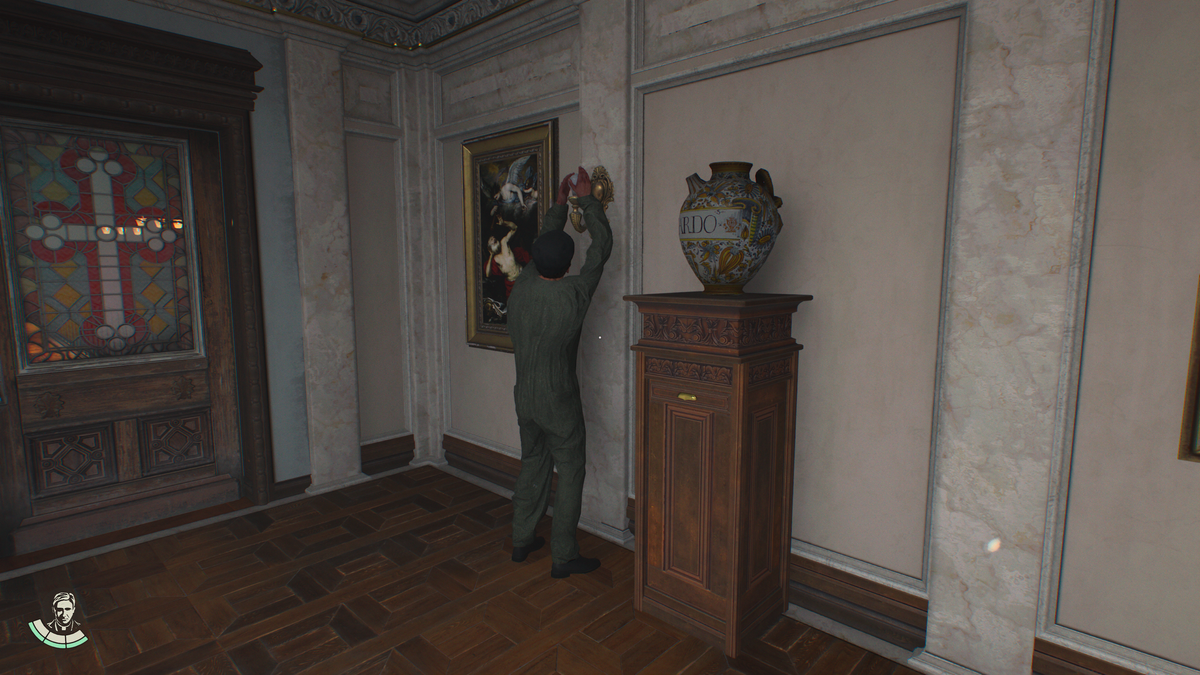
Cardboard cutouts would not do much better
Cities in videogames are not very good. They have not improved in quite some time, which indicates there is not much interest in improving them. They're not good in that they don't feel alive. A lot of cities, or any urban areas, in videogames consist of NPCs that either: 1. Stand in place forevermore. Or 2. Have a very basic movement routine, where they will go from A to B endlessly. All suffer from limited voice lines. Real people are full of thoughts, memories, histories, ideas, beliefs, which influence how they move, talk, what they do, and so on. People in videogames are fake.
The dark ride comparison is one I often make between linear Call of Duty set piece style videogames, that is, those with a campaign that shuttles you from one point to the next with set pieces that excite and are not to be looked any longer than a few seconds. This also applies to urban areas in videogames. They are convincing only when you do not stop to look. A dark ride is entertaining and fun and maybe a little convincing as a storytelling mechanism until something happens, the ride stops, and you're stuck in front of an animatronic that is repeating the same basic movements and canned line for however long it takes to start moving again. Cities in videogames are the same. Stop and look and listen to anyone. You will quickly realize how fake it is. They might as well be cardboard standees.
Avowed is the latest game to suffer from this problem. Sometimes I will pass by a couple of people, they will have their conversation, and then they will just stand and never say anything again. They will always be there when I pass by, no matter what time it is or how much time has passed, they remain. This is not unique to Avowed. In Cyberpunk 2077 I would frequently pass a person or group, they would say their line, and if I stayed and observed they would continue an idle animation and never have any further lines. This was quite humorous in the case of those on a phone as I would expect them to continue to have a conversation with a phone to their head. At least the excuse for others are that they are simply standing and waiting quietly.
This problem is prolific in open world RPGs and extends to smaller games as well. Smaller in that they don't represent such a large landmass or equivalent square mileage. Indiana Jones and the Great Circle is much, much smaller than an Avowed or a Cyberpunk 2077. Due to this it is able to be much more detailed and dense. However, that does not extend to its people. There are individuals who will be working on construction, hammering away forever. Or, as in the case of the thumbnail of this article, stand continually screwing in a lightbulb. There are lots of workers that are standing around doing routine tasks and performing idle animations that if you were to walk by without paying attention would convince you that this place is alive. As soon as you stop and pay attention for any significant amount of time it becomes very apparent that this is a fake and dead place. This is not to devalue the beauty these urban areas are frequently able to achieve, but they are better represented by still images captured via a photo mode than in revealing motion1.
It is a monumental failure in videogames because videogames superior to any other medium is able to allow you to occupy a space2. You control the movement of your character–this is especially true from a first person perspective–and are able to occupy and exist in a space that puts you there more so than watching a movie does, than watching a TV show does, than reading a book even does. It is truly wonderful to exist within a space in games. And that is why there should be more effort put behind solving the problem of making cities feel alive. Even Red Dead Redemption 2 with its expensive development still had NPCs that were, at best, a little better than normal but were still very fake. Walk into Valentine and people are doing their thing, maybe even walking around. Pay attention and it is the same as other open world games where they are not real, they do not act like humans, they spend far too much time doing nothing at all or walking in circles.
I think this is the answer to the question of what a “next gen” game should look like/do. I'm so tired of the chase for fidelity in videogames. Such a short-sighted and fleeting achievement. Making living people and cities instead of poor approximations is a more worthwhile area to focus on. It is a shame, too, because this is something that would really exploit what only videogames can do. The level of detail of the textures on the wall is not what is keeping us from advancing. People perpetually milling the soil and repeating the same barks anytime you click on them is what is limiting. Why can’t we focus on this instead of ray tracing and pixel density and HD megatextures. Time and effort are far better spent elsewhere.
I do acknowledge the appeal within “ambience” videos of certain urban locations in games, sometimes featuring crowds though generally focused on a landscape than idle NPCs. ↩
Further reading: Nathalie Lawhead, “walking sims and the joy of existing in a virtual space” https://www.nathalielawhead.com/candybox/walking-sims-and-the-joy-of-existing-in-a-virtual-space ↩