A Reading Manifesto
or a theory on how to break through circuitous discourse
You should be reading other people’s work. My hope is to encourage more reading using quotes I have found through my own reading (or listening).
But part of the function of firing everyone at these websites and stuff, or maybe a side effect, is that the sort of cultural institutional memory of this work gets eliminated. And so people just don’t have a basis, they don’t have a history for what has been done before. Not because they couldn’t build on it, but they’re just unable to build on it. And so we just get the same kinds of things, the same conversations over and over. People acting like they just pulled the sword from the stone when it’s like, this has been done and it would be awesome if people were able to further those ideas.
Astrid Rose on Gone Shootin’ - Afghanistan by Bullet Points (2025)
Large sites such as US Gamer, 1Up, Joystiq, Edge Online, and others disappear. Defunct magazines have to wait a decade plus before they can be scanned and shared free of most legal threats, if anyone remembers to hold onto them that long. Bloggers stop paying hosting fees and have their website revert to a GoDaddy advertisement, or the host shuts down entirely, erasing the blog from existence outside of what has hopefully been snapshotted by archive.org (RIP Brainy Gamer). A lack of familiarity with what has been done, combined with the erasure of the existing body of work, sets us up to repeat the same conversations and arguments again and again and again. If our foundations are constantly being eliminated how can we build any kind of satisfactory library? If we do not read what is being written now, how will we know what has been lost when it is gone?
In the introduction to the videogame essay anthology Critical Hits, co-editor Carmen Maria Machado claims that it is “the first of its kind, as far as I and my co-editor can tell.” She and the other co-editor J. Robert Lennon made similar assertions in a November 2023 interview with Electric Literature. Shortly thereafter, social media was afire with writers who are in the same spot I am, who have been writing literary-minded essays about videogames for years, if not decades. It is frustrating to feel unrecognized. However, Critical Hits’ fundamental problem is not that it doesn’t show deference, but that it doesn’t learn lessons from game criticism’s checkered past. It recreates its numerous failures and foibles.
Grace Benfell, Essay Anthology Critical Hits Is a Dull Rehash that Fails to Engage with Games Criticism - Endless Mode (2024)
How can we build up and out if everyone is laying their blocks separately from each other? How can we hope to learn anything if we refuse to look for what has already been said? Illiterate writers removing and replacing the same base brickwork year after year.
We do, at least, have something of a videogame culture; major media do pay attention to them, and there are innumerable sites devoted to them. And gamers passionately debate the merits of the games they play. And yet, those discussions are curiously uncultured, too; the average gamer’s ignorance of the history of the form, of the contributions of different creators, of the evolution of genres, is staggering. Games suck or rock; no nuance here. And gamers have been trained to expect and reward spectacle over originality; the number of commercially viable genres continues to decline over time.
Greg Costikyan, Twiggy Game: No Culture (2009)
Citations are the lifeblood of an academic career. They help to build a scholar’s reputation. They are used in tenure and promotion cases. And they are essential for funding and grant applications. Citations are particularly valuable for scholars trying to develop new fields, like historical game studies. Citations are also important for the author because they show that the scholar has done their research and can be trusted when they say something like “no other historian had tried this before” (You know what? Don’t trust anyone who writes something like this. Bad example). During my graduate training, I was encouraged to cite even books that I hated just so I could demonstrate my knowledge of the field. For example, I’ll probably be citing Red Dead’s History for years to come. It’s a professional courtesy, but it’s also important for establishing the author’s own credentials and argument.
Robert Whitaker, Reviewer 2’s Review of Red Dead’s History (2025)
Without reading we are unable to cite other’s work, which further obfuscates what has been done and makes the search and discovery of previous work more difficult to perform. I cannot tell you how valuable hyperlinks and citations have been to discovering old blog posts, arguments, articles, and reports. Without specific knowledge of a quote or author or timeframe, it can be near impossible to find some of these old writings, especially when their hosts are closed and only archived copies remain.
Ultimately, though, we need to begin. We need to stop asking why there isn’t game criticism and start writing some. Maybe it will fail to distinguish itself. Maybe few games are ready for serious critics. We still need to try. If we don’t, then someone, sometime down the road, is once again going to ask why there isn’t any real game criticism.
Logan Crowell, The Alligators Have Good Graphics: Beginning Game Criticism, Vol. 1 (2009)
We spend more time talking about the work than actually doing it. Posting on social media has eroded the power of the blog. Now we shoot off 300+ character off-the-cuff thoughts and ideas instead of spending any time developing and strengthening them.
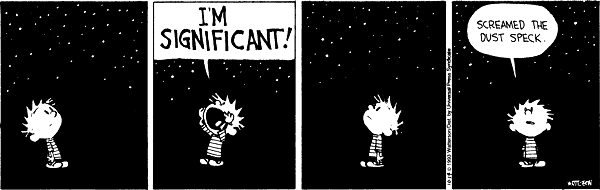
Discourse online is circular. We relitigate the same arguments again and again. We find new ways to reshare the same game lists. Everything is happening all at once at all times and new things continue to happen constantly that there is no time to dwell on anything. All you ever get is surface level evaluations and an audience who are conditioned into not reading anything longer than 5 minutes and demand everything be free. Are we all just posting to shout out to the void?
This focus on Red Dead Redemption II as well as a lack of reading in the field of historical game studies has a lot of negative effects on Tore’s book, but the most important negative consequence is a lack of curiosity.
Robert Whitaker, Reviewer 2’s Review of Red Dead’s History (2025)
Do we lack curiosity? Do we not want to know what others have said or thought or come up with about works we have experienced alongside them? We enrich our lives by taking in the works of other artists, similarly reading fellow critics works enriches not only our lives but our ability to articulate ideas, to refine rough thoughts, to be introduced to perspectives, ideas, and thoughts not previously considered because we simply could not look beyond ourselves without another speaking to us from outside.
Olivier Prud’homme, better known as gixG17, passed away in early 2024. He was someone who posted let’s play videos onto YouTube, long before they would explode in popularity. He is behind what is likely the longest running let’s play of The Elder Scrolls III: Morrowind on the platform. Watching the beginning of his playthrough from 2009 was to look in the mirror at myself. We both lacked an understanding of how every system worked, of how nearly all mechanics were influenced by fatigue, how quests might have unspoken requirements. I watched him play and saw myself playing. I was struck by a sadness that I would never be able to share this recognition with him, whether directly or through a comment. I would never be able to embrace him and call him brother, share my own confusion, my own understanding gained over time. It pushed me to embrace others who are still here now, to reach out and share appreciation for their expression, to show appreciation for our shared perseverance.
Your thirst is mine, my water is yours.
I love the poeticism that is implicit in such a statement. It is an acknowledgement that, even in post-apocalyptia, when someone suffers, we all suffer. That our measure as a society is only as good as who has the toughest material reality. That someone’s thirst isn’t just their own, it’s our communal thirst as well. And if your thirst is mine, then the only ethical thing to do, is acknowledge my water is also yours. It is one of the most empathetic actions I’ve ever engaged with in the realm of gaming.
Your Thirst Is Mine, My Water Is Yours (2025)
Reading leads to conversation, something I have attempted with my Reading Games Writing series and have seen some others engage in conversation via articles. The main difficulties with this are: 1.) the time investment of actually playing a game to build a response, and 2.) the reticence amongst the critic sphere to disagree publicly trained by decades of reader comments and drilled in by the perpetuity of 2014’s campaigns of harassment. Not to say catty subtweets online between the various social circles surrounding online writers and their cliques of friends and fans don’t happen, but I cannot imagine a similar situation to someone critiquing a novel by writing their own1? Aside from the back and forth on how games media is dying, where are the conversations happening? In secluded discords?
I think to all the friends I know, who just do not talk about certain works or creators out in the open, whether it’s about what works or what doesn’t, because even people who would call themselves ‘friends’ will respond poorly. And I wonder why, even amidst so many incredible, brilliant, smart people, we have to play this game of nonsense. Why can we not respect and be decent to folks, solely because they had a different experience with a piece of art? Why can’t we just listen, rather than write them off or make excuses, or build some wall of justification? Why do we treat criticism like a war, rather than a conversation? When did we lose all capability of discussing Art with totally different positions and viewpoints?
Ritesh Babu, The Trouble With Easy Criticism (2021)
The odds are stacked against us when it comes to building any school of writing about games. Yes, we have podcasts, we have a scattering of independent websites, we have established institutions that have a few individuals who are able to create worthwhile writing despite their employers. We have freelancers eeking out a living pitching place to place. We have the rare good YouTuber. We still have blogs despite Twitter’s best attempts at killing them off. We have successful patreons that are spun off by individuals who established themselves grinding away at your IGN, your GameSpot, your Polygon.
Games criticism (if not the media in general) is in strange tides these days. There’s more criticism and content than funding models to support it. Advertisers are increasingly looking for numbers that only colossal sites like Google, YouTube, and Facebook confidently provide. Commercial publications try to play along or game these rules, but a slight tweak to an algorithm can spike a career’s worth of work. More cynically, there’s little incentive for Google and Facebook to even share these audiences. The trend suggests they’re comfortable keeping the eyes of the world on their own sites.
Zack Kotzer, PleaseFundMe: How Crowdfunding Is Changing the Way We Talk About Games (2019)
Those who did not spring forth from a mainstream site are fighting for the scraps. The funds taken in by patreons that consist of individuals who spun out from Giant Bomb, GameSpot, IGN, Eurogamer, Kotaku, Polygon, Game Trailers, and 1Up make over twice as much as those who were always independent entities (I believe the current favorite term is “worker owned”).
Do you think you’ve seen an actual decline in the maturity of the craft?
That’s a good question. I’ll put it this way: When I was starting out, this would have been early 2010’s, that was the Brainy Gamer, late aught’s crowd of people thinking about games and games critics and the Kill Screen generation working their way into the games press proper and elevating the level of conversation on these sites where the enthusiast audience would read them. We know how that turned out with GamerGate, and there was a regression. But after that the baseline was higher than it had been. With the decimation of digital media and the lack of interest in games media as a revenue generator for media organizations, there’s no incentive to elevate the craft, to be an exemplar of the craft or for smart criticism to be a part of your brand. So, it’s relegated to indie publications like Bullet Points and Unwinnable and Uppercut that have been around for a while now, but no one is making a living off of that.
Autumn Wright, A Dialogue with Joshua Rivera - Unwinnable (2025)
Broad cultural commentary is preferred to specific individual critiques. A longstanding refrain I hold is that there is nothing games media loves to talk about more than games media. This bears true, as among my own posts, the ones aligned with cultural commentary or critique, such as this one, are much more viewed than those that are not. Despite this I plan to continue writing critiques of individual games, especially those created by small teams of individuals. I enjoy the work itself. That is the drive behind all I have ever done, is the pure pleasure of it. The pleasure of writing, the pleasure of reading, the pleasure of conversation.
Reading is a pleasure in itself, and even reading of poor writing can be inspirational in how to better articulate, better understand that which you are oppositional to. Reading for me is the introduction of new perspectives, and new words. Filling my commonplace book with words that have texture, elegance, enlightenment.
Reading usually precedes writing. And the impulse to write is almost always fired by reading. Reading, the love of reading, is what makes you dream of becoming a writer. And long after you’ve become a writer, reading books others write -- and rereading the beloved books of the past -- constitutes an irresistible distraction from writing. Distraction. Consolation. Torment. And, yes, inspiration.
Susan Sontag, WRITERS ON WRITING; Directions: Write, Read, Rewrite. Repeat Steps 2 and 3 as Needed. (2000)
The money behind games are perfectly fine with the erasure of history, of a lack of conversation, of the lack of curiosity, of the hostility between audience and critic, because it means they get to pedal their newest product for purchase without question.
And you can talk about preservation, and the curation and safeguarding of videogame history; if games often feel unoriginal or unimaginative, and it seems like audiences are easily wowed, it might be because nobody has played anything that’s more than ten years old. It’s in the interest of game publishers and game developers to stop that from happening - if the original version of Assassin’s Creed 3 was still available on Steam, probably fewer people would buy the $40 remaster. It’s nefarious corporate behavior, and it also warps the general understanding of what videogames are.
Ed Smith, System Shock 2 Remastered makes modern triple-A games look bad (2025)
In an attempt to promote reading and providing a central resource to access worthwhile writing, I have created a document that organizes articles by topic and individual games. I have been filling in the document using my memory, submissions from others within the SuperCulture Discord, and the weekly roundups created by Critical Distance. My desire is for this to become a community resource contributed by other readers and used by other writers. If you have any writing you’d like to see added please comment, message me, email me (steven.francisco.santana[at]gmail.com) and I will be glad for the interest and help, even if you don’t have a direct link a few keywords and details are generally enough for me to track down the source.
Games Writing Resource
It’s in the strapline of every one of these columns: read more! I’ve curated The Sunday Papers in part to spread writing I think is worthwhile, but I’ve also handed the reigns of the column to the newest writer on the team several times over simply to give them an excuse to read more during work hours. The field of games journalism has a cultural memory of about six weeks in part because even the practitioners of it don’t read enough games journalism - but also, you should read voraciously outside of videogame journalism, too.
Graham Smith, The Sunday Papers | Rock Paper Shotgun (2025)
Thanks to Sean McTiernan for SFULTRA #6 - The Dispossessed - Ursula K Le Guin for leading me to this info and subsequently reading the excellent Trouble on Triton by Samuel R. Delany. ↩