rain (2013) Review
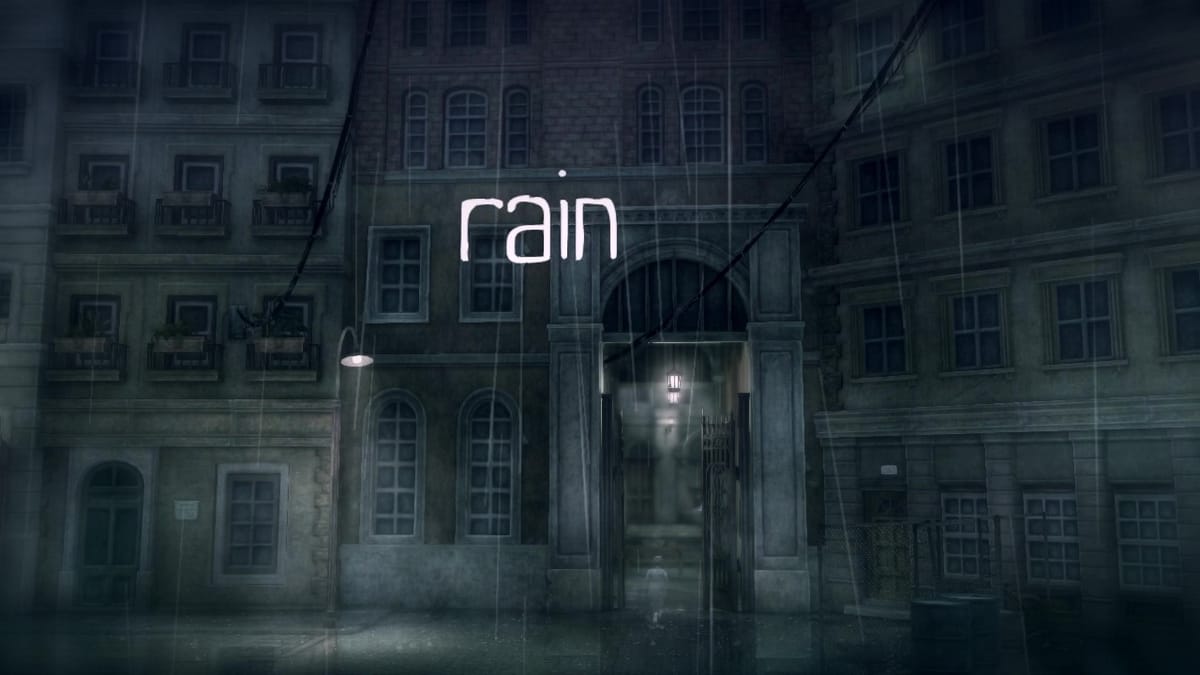
In order to separate its brand from the casual family friendly dominance of the Wii and the mainstream bro dominance of the Xbox 360 Sony pivoted the PlayStation 3 towards a more high-minded prestige art brand. This resulted in games such as .detuned, Linger in Shadow, Echochrome, Flower, Noby Noby Boy, and an ultimate success in 2012’s Journey. In 2013 we got a very, very late entry into the “art” game landscape with rain from PlayStation C.A.M.P. (Creator Audition Mash up Project!), Japan Studio (RIP), and Acquire (Tenchu & Octopath Traveler).
rain’s ambitions are clear. The game is not very loud or fast, lacks any voiced dialogue, and relies more on mood through the constant presence of rainfall (a very popular YouTube background genre) and some classical music tracks (fans of Action Button will immediately recognize the usage of Claude Debussy’s Suite bergamasque, L.75: III. Clair de lune) to establish its tone and overall feeling of a wistful childlike dreamstate. Except that the game is also constantly telling you what the characters are thinking, feeling, doing, where they need to go, what they need to do, and that you can always press “Select” to get a hint on what to do if the flashing light up against the wall that will display “Lift” when you get close to it was not enough of a guide marker for you. rain never becomes complex and is forever a simple affair, the foundation of every puzzle is that you are visible while in the rain and invisible when not. Make noise, move things about, jump from one platform to another, you’ll never be challenged in such a way that can sufficiently explain why the game is so eager to tell you what to do next. A shame too as a textless version of this game might have left a stronger sense of place and mood and feeling if we were left to our own thoughts on the proceedings. Unfortunately the exposition is so baked into the presentation and gameplay that my idea to edit together a playthrough with all that cut out would be unwatchable for all the gaps.
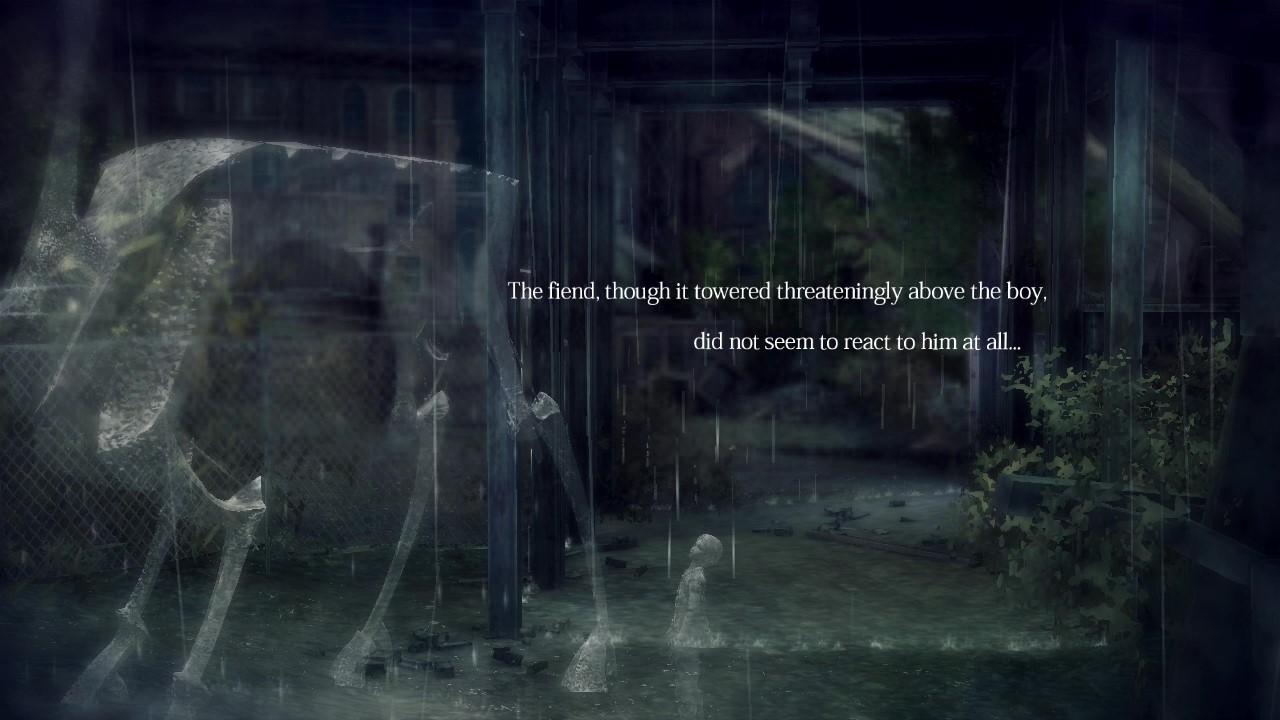
A boy, likely sick with fever, awakens to see a girl outside being pursued by some entity. He gives chase only to find his corporeal body lost and that he has become invisible, only given an outline when rained upon. You proceed through many different French streets, alleys, a church, a factory, riverside, sewer, circus, and eventually a much more surrealistic world of blocky nonsensical combinations of familiar terrain of arches, roofs, stairs and other building blocks arranged in a way reminiscent of M.C. Escher but not as reality bending. An entity stalks you and the girl throughout as a Resident Evil Nemesis-like figure who hates the light and is eventually defeated after a protracted death sequence. You awaken in the morning, unsure of the girl’s ultimate fate, make your way to her house in the sunlight and make contact for a nice happy ending. As I said, simple. However even the simplest of stories can become touching when portrayed well, but the constant text pop ups of, “He still had to guide the girl,” or, “And beyond the circus, they could just make out the little house,” ruin it. I remain an advocate of show don’t tell, and this game takes both to an extreme, not only constantly expositing on you but also constantly cutting to a perspective that shows you just where you need to go to move forward, negging you with pop ups letting you know just what to interact with.
A final insult is that throughout my playtime I felt that something was missing, avenues would go off into dead ends with seemingly no purpose. I do not believe in the idea that every single aspect of a game must reward the player but my sensation of a missing piece was answered when upon beating the game it informs you to play again and collect memories scattered about each chapter that display an image and a brief text. Whether this builds into anything greater will have to be answered by yourself after watching a YouTube guide that links them all together as I cannot be bothered. What was once something I thought might join the likes of Journey or Echochrome is instead demoted to a morbid curiosity that has now been fulfilled and unlikely to be taken up again.