The Legend of Zelda: Tears of the Kingdom
What was originally a response is now just a summation of my thoughts so I can move on
When I first read Jed Pressgrove’s “My Heart’s Not in Zelda or: Nobody Saves Gaming Culture” I had not yet played The Legend of Zelda: Tears of the Kingdom, but I believed I would likely end up disagreeing with most of his points by the time I did play it during my Christmas vacation. Now, 50 hours later, I’ve been reflecting on that time spent in the game and come away agreeing with his overall point that Tears of the Kingdom has no heart.
I find the presentation of Tears of the Kingdom’s open world insidious. It is presented as different from the usual open world time wasters that populate a not insignificant portion of the AAA marketplace nowadays. Starfield, Avatar: Frontier’s of Pandora, Horizon: Forbidden West, and Far Cry 6, all examples of the to-do checklist open world games I very easily write off as unworthy of the time they are asking. I thought Zelda would be different. I enjoyed my time with Breath of the Wild, its sparse world was antithetical to the checklist nature of its contemporaries. Tears is a direct follow up with the same map remixed with fissures of gloom and debris from floating islands in the sky above changing the familiar landscapes into something a little bit different. An indeterminate amount of time has passed as well, allowing for further changes in terms of town development.
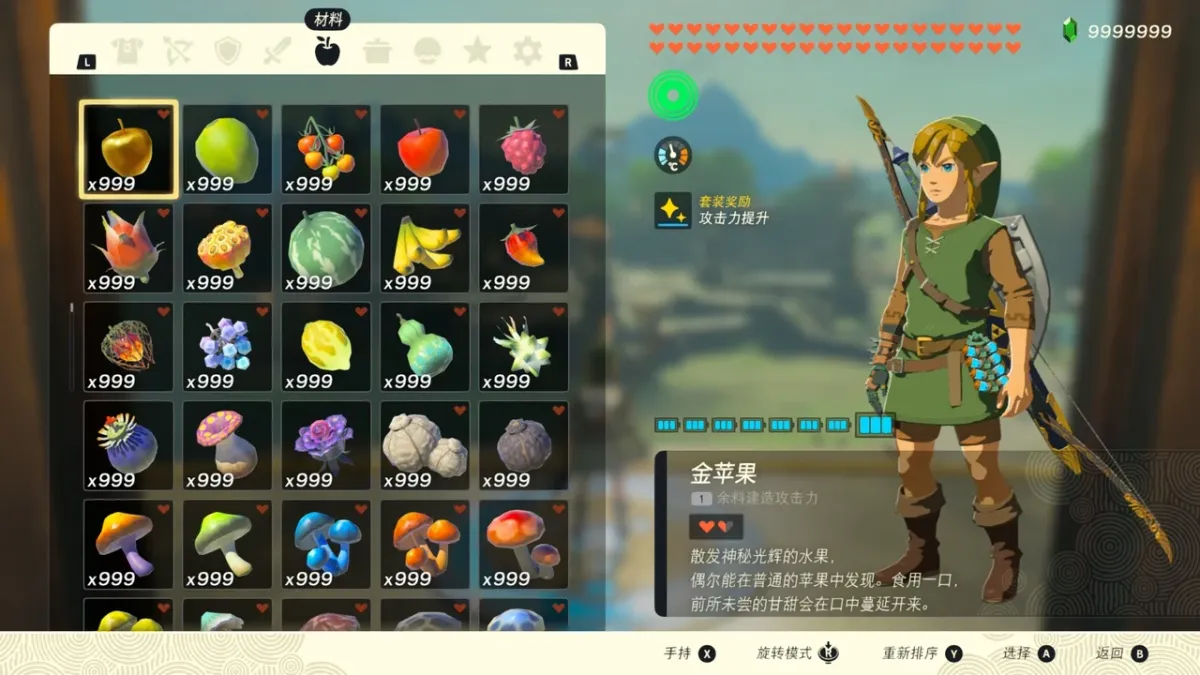
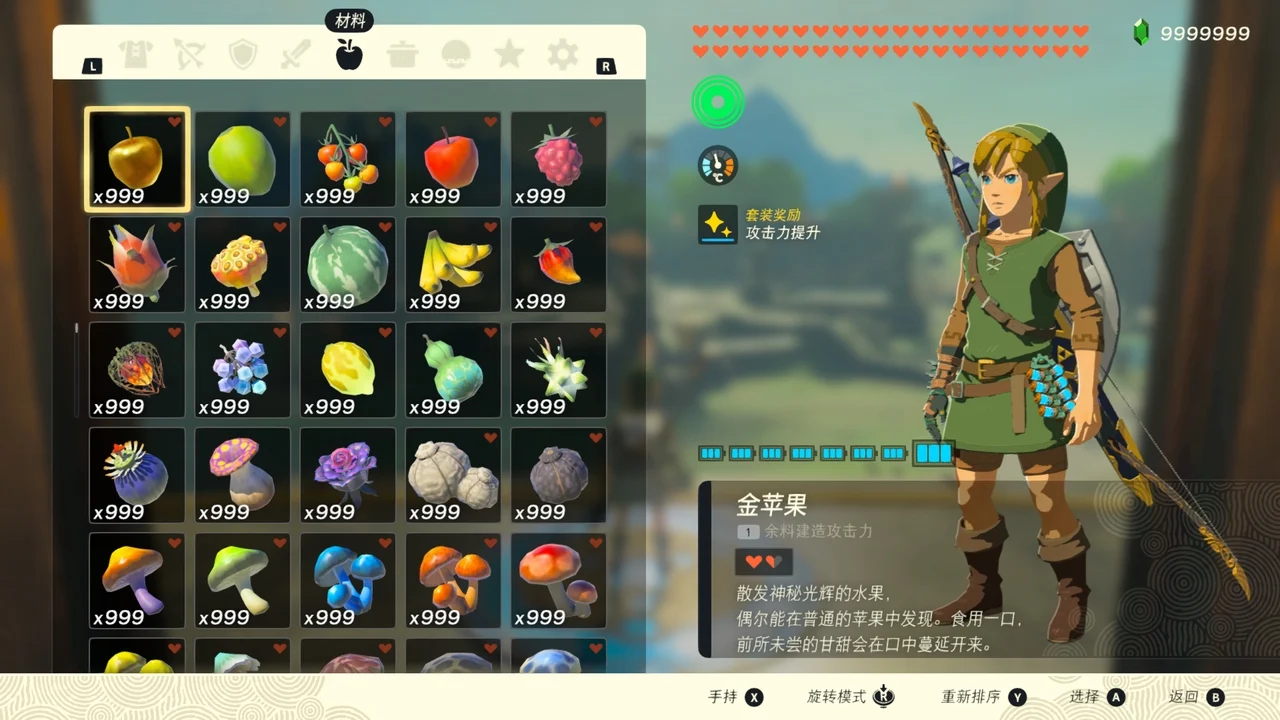
Despite the familiarity, the map seems to be much more populated with “stuff.” Some of this existed before. You picked up a lot of stuff in Breath of the Wild that you would occasionally have to sort through to create meals when cooking, but largely the game did not force you to incessantly play the game of inventory and confront you with all the stuff you have accumulated like Starfield or Fallout 4. With the introduction of fusion, as well as monster parts, more currencies and stuff to collect, you are forced to contend with the bottomless inventory much more often, and therefore forced to ponder why you fill your pockets with so much stuff that goes unused. It is as Pressgrove describes, “Tears of the Kingdom is not unlike many modern big-budget video games: mechanics upon mechanics, curios upon curios, waypoints upon waypoints. All the crap you pick up is not actually crap, yet nothing feels essential.” Shrines, korok seeds, towers, and various item drops return and are supplanted by wells, caves, depths, sky islands, and zoanite machines. The map still won’t autopopulate an icon until you’ve reached it in-person, and by that point why not just knock out this tower or shrine or dungeon? They never take very long or require much thinking, and are as a result also not very memorable. It is immensely playable, easy to pick up and your wandering is constantly rewarded with stuff. The game never requires much in terms of expended concentration or complex puzzle solving. This is also part of the insidiousness, its so easy to just play for fifteen minutes to find and complete a shrine, why not let it become part of your daily routine, until you blink and you’ve lost 50 hours to something where you can’t name more than five new characters.
Of course some are more than happy to spend the cumulative time without a second thought. IGN reviewer Tom Marks was chomping at the bit in their review to dive right back into the nearly endless stuff of the game in their review. “Whether it’s lighting up the darkness below, flying a custom glider between floating rocks hundreds of meters up, or just seeing what’s down at the bottom of some random well, there is so much to do in Tears that it’s easy to spend hours upon hours completing tasks without ever once looking at your quest log.” I find myself more in line with the thinking behind Edwin Evans-Thirlwell’s writing at Eurogamer, “As with Skyrim's old Draugr dungeons, there's a slight sense of design-by-spreadsheet, and a greater commitment to filling in spaces the previous Zelda game, 2017's Breath of the Wild, left powerfully vacant.”
Despite my grievances I do find one addition is still worthwhile after all this time: the depths. Underneath the overworld exists its shadow version, a map of black darkness waiting for the player to slowly light it up and reveal what exists underneath Hyrule. The wonder of watching a brightbloom seed attached to my arrow as it arcs into the distance, lighting up a circle of land around it once it lands on its mark is still capturing my attention every time. The overworld of Breath of the Wild was famously built upon the ethos of showing the player a point of interest no matter where they were located. The depths are the opposite, you never see beyond what you have revealed yourself, and the darkness and the mystery of what it might be hiding is enticing. The most memorable events in my time have been in the depths, from finding an unbelievably tall stone column obviously created for you to use ascent through (in which Link pierces solid rock as if it were liquid and swims to the top), or an arena holding a copy of a boss I had encountered at the end of a dungeon. Enemies in the depths are covered in gloom and when exposed or hit with gloom Link’s maximum health is knocked down, creating more challenge in enemy encounters than anywhere else.
Zelda and Link as characters remain simply outlines for the fans to fill in, which I have never found adequate for the drama the game is going for. Tears of the Kingdom is a tragedy, Link and Zelda separated this time by time instead of location, but none of that really matters when it is delivered in such a drip fed fashion and the characters have no emotional or intellectual depth. These are not real people. They are incapable of holding conversation, especially given Link’s muteness in cutscenes. Thematically what is being presented are the same fantasy tropes we’ve seen since our births. The sky is heavenly, pure, morally good, uprighteous. The depths are corrupt, evil, immoral, dark, ugly. Tears of the Kingdom also commits another insidious and boring trope, that of an ancient civilization being somehow more advanced and superior technologically than the contemporary time period. It is a fantasy trope I find drenched in the fundamentals of conservatism, that what came before in an undefined past was better than what we are living in the present. Despite their advancement, they were also incapable of defeating the big bad, something that falls on me and my stick fused to a bokoblin horn weapon.
Tears of the Kingdom is a game whose quality is in flux and frustrating to grapple with. While playing it, I am curious to see more and find it easy to sink hours into. Then when I begin to sit and think about that time spent I am less certain that most of what I did was truly memorable, and therefore worth doing in the first place.