The Writing is the Reward

Numbers going up in videogames is boring. It is pervasive and a hamster wheel. Receiving text in games is what makes them worth playing due to their potential to move me and speak to me in ways numbers could never.
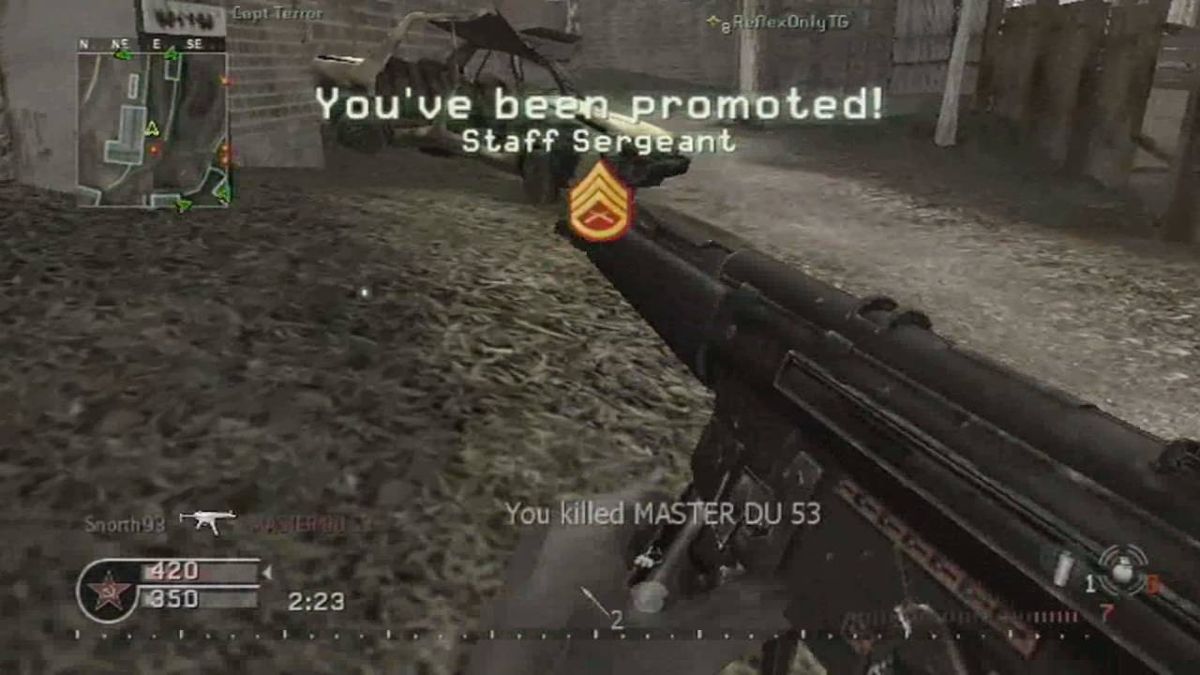
Numbers go up as a genre is everywhere. We are living within the consequences of Call of Duty 4: Modern Warfare and its refashioning of RPG leveling mechanics into an online multiplayer metagame. What was once isolated became connected. Now you can’t go two releases on Steam without running into one that doesn’t contain some meter to fill, items with varying percentage effects, some weapon to compare damage statistics to another with, some skill list to pump up, some completion gauge to increase, a battle pass to fill in, or some economic good to accumulate and hoard.
This number game and its prevalence in every single game nowadays means the effect of seeing a number increase becomes more deadened as you’ve done it now hundreds of times. Again, Call of Duty 4: Modern Warfare knew this. Its prestige system, in which a player that reached the maximum level could choose to return to level 1, losing everything in order to restart the accumulation from the beginning with a fancy icon next to your name to denote a higher status comparatively. Life at the top just wasn’t as fun without that guitar riff signalling your level has increased. Completing challenges wasn’t as rewarding when the XP granted didn’t fill up a bar.
Numbers are rarely used interestingly. Diablo III coming to PlayStation 3 was when I realized the loot grind was not as satisfying a pursuit as I imagined it to be. There were simply way too many items with incremental differences, ones that don’t justify the time spent comparing them as I contemplate whether a reduction to melee attacks of ranged attacks by 2% is more worthwhile. This leads to a hoarding of items I lie to myself will prove useful later on but just take up space. Diablo’s descendents all have this problem: Borderlands 2, Guild Wars 2, Torchlight 2, Path of Exile, Destiny, Fallout 4, Witcher 3 (which somewhat bypasses this problem as the Witcher school gear is far and away the best equipment), Final Fantasy XIV, The Division, Hades, Cyberpunk 2077, and these are just the ones I’ve played. In all of them I’ve wasted countless time staring at item screens making inconsequential decisions of what specific set of numbers I want more than the other and then determining whether to sell or break down or hoard the rejected piece. In Cyberpunk 2077 I was able to finally able to somewhat break this spell and begin automatically junking everything below a certain color level and even then I have to resist the siren call of dwelling on whether this damage amount is good enough even though its reload speed is slower but maybe armor penetration is larger and so on. Death to endless number variations!
Videogames are also largely too concerned with large numbers and succumb to the “puny paradox” as described by YouTuber Daryl Talks Games.
Essentially games that display their numbers in smaller increments contain greater effects within the variation of those numbers than the objectively larger quantitative volumes of huge numbers. The increase of 2 -> 3 is greater in effect than 2,000 -> 3,000, even though there is a greater infinity between the latter two. This problem is less present in shlooters and more so in RPG’s of the Final Fantasy vein, with an arc of ever increasing numerical values when it comes to how much damage you are inflicting with your attacks.
Increasing numbers in games by itself is not enough to justify spending time on it. I completed many, many Apex Legends battle passes not because I needed to fill up a meter but because I was already going to be playing a hundred hours of the game per season for the thrill of the multiplayer confrontations with other players. Its loot was simplified down to specific attachments for weapons with tiered colors with no comparison between what you have and what you see. Even with Marathon, a game I quite enjoyed during its free week at the premiere of season 2, I found myself staring at the screens of loot with their gradual differences and my eyes glazed over. Thanks to the overwhelming chance that this gear would be lost within the first firefight, I was able to just pick almost randomly what I was taking with me without a care for how fast it recharged my shields or if headshots increased my reload speed.
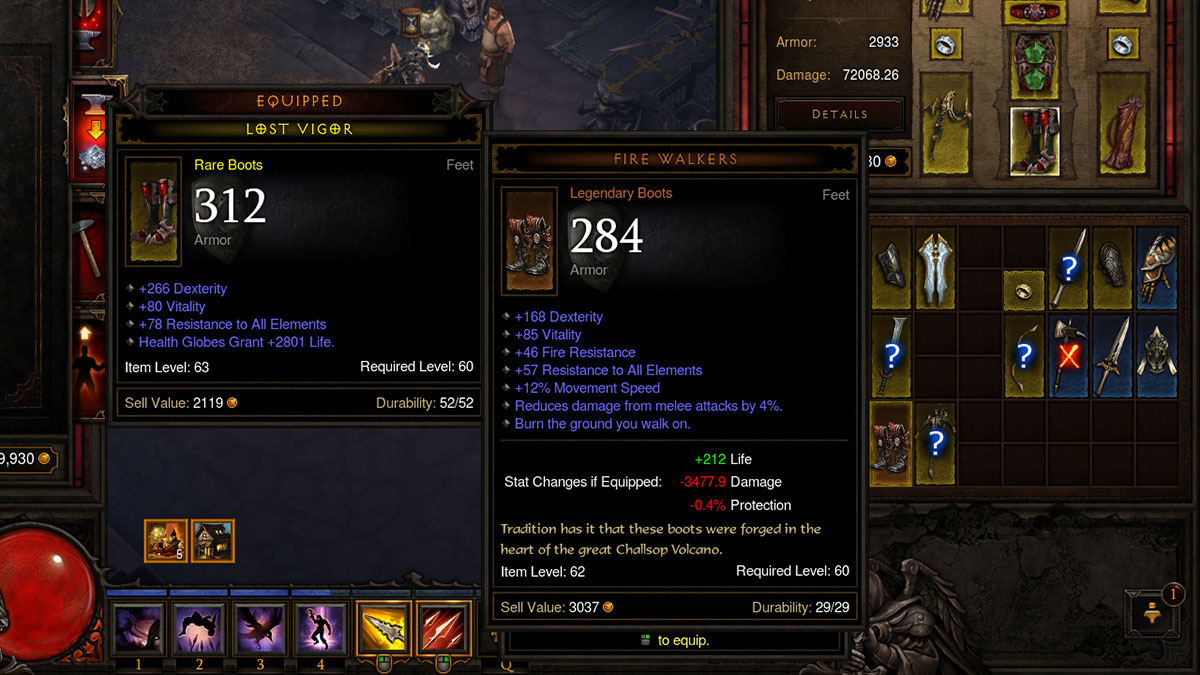
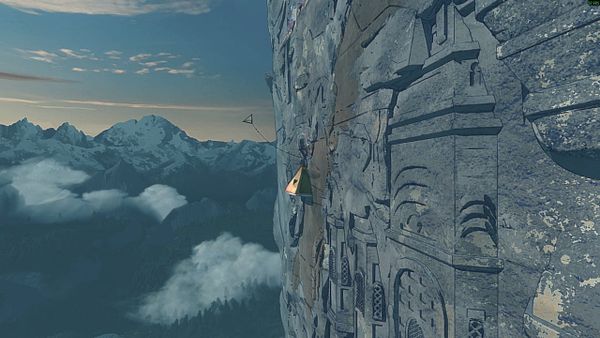
Diablo III was a game purely built around the slow accumulation of gear and gradual increasing of numbered resources and outputs. Ubisoft’s open world template of transferring the numbers on a map into yourself became so viral it even infected The Legend of Zelda. Tears of the Kingdom corrupted what was previously a game mainly concerned with wonder into one of material gain. Korok seeds, caves, shrines, lightroots, wells, shrines, bubble gems, rupees, zonai dispensers, armor pieces, poes, and more things to track more explicitly than in Breath of the Wild while you work towards 100% completion. You kill enemies so that you can gain items so that you can kill enemies to gain items so that you can kill enemies to gain items. This would be excusable if the game offered that which is more rewarding than simply increasing numbers: (good) writing.
As Tears of the Kingdom shows, writing within games is tougher to achieve than creating a treadmill. Everyone always complains that writing in games sucks, to go read a book instead, blah blah blah. Recent whipping boys include Dragon Age: Veilguard, Monster Hunter Wilds, Forspoken, Borderlands 3, and Saints Row (2022). This is not a new phenomenon. In 2012 you had Extra Credits posting their video, “Bad Writing - Why Most Games Tell Bad Stories.” Back in 1944 you had Raymond Chandler writing about how most detective fiction sucked. “The average detective story is probably no worse than the average novel, but you never see the average novel. It doesn’t get published. The average — or only slightly above average — detective story does. Not only is it published but it is sold in small quantities to rental libraries and it is read. There are even a few optimists who buy it at the full retail price of two dollars, because it looks so fresh and new and there is a picture of a corpse on the cover.” On top of which he adds, “The detection of quality in writing is difficult enough even for those who make a career of the job, without paying too much attention to the matter of advance sales.”
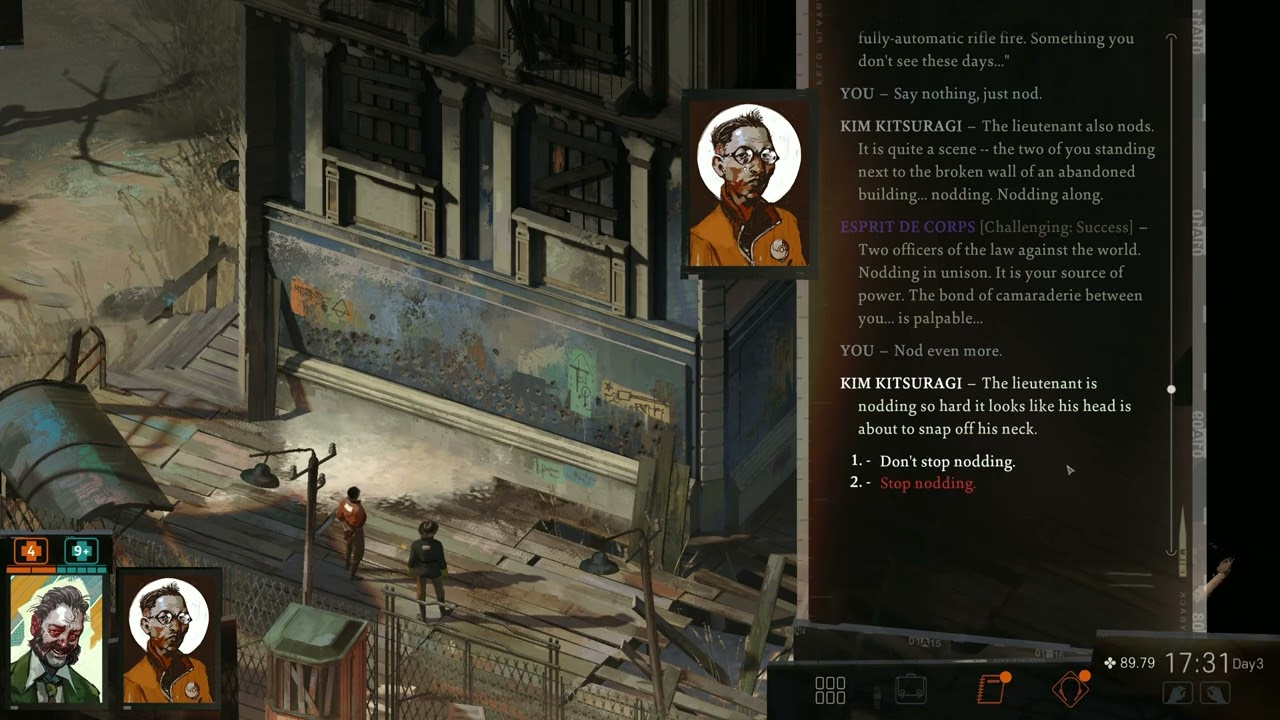
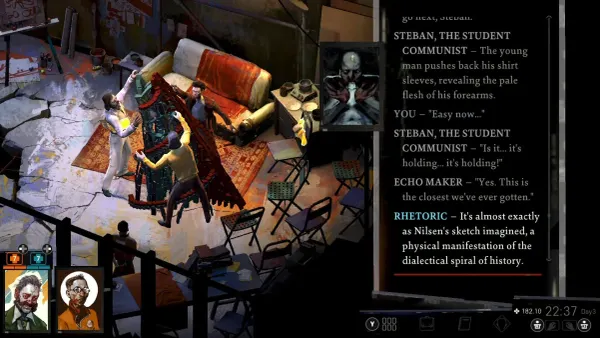
The potential that exists within text is much larger than numbers. Yes, I’m bringing up potentiality rather than reality as the first point but stay with me. Rendering something through text allows for the mind to build so many images within itself. This was one of my main points when first reviewing Disco Elysium for Dualshockers seven years ago. “An advantage of text-based over visual-based presentation means there is much more variety and depth to the people and topics at hand. Much like how books supersede movies in terms of conjuring a larger and deeper image of events, Disco Elysium’s reliance on text means it is able to describe things to the player that they would never be able to render, as well as allow the player character to have a constant internal dialogue with themselves.” Disco Elysium’s text (because pre-Final Cut voiced lines were the exception not the rule) conjures up such vivid images for people despite the actual graphical display being fairly rudimentary. A portrait and writing is what brings a character like Kim Kitsuragi to life, not Photogrammetry scans.
In opposition to text, numbers are hard, precise, stoic monoliths that impose their mathematical certainties on you. Text is fluid, provocative, potent, elegant, blunt, sensual, noxious, vivid, visceral, tangible, abstract, hyperbolic, humorous, and much more.
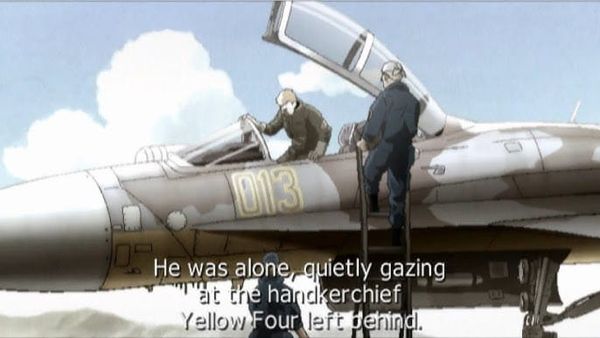
Receiving writing within a videogame can be more interesting than reading a book. Thanks to the nonlinear movement of a videogame the writing can come from something like the now typical audio-logs of BioShock and (the superior) BioShock 2. A note such as the many tragedy containing ones found on dead bodies in The Witcher 3 and Cyberpunk 2077. The humorous graffiti on the walls in Left 4 Dead. An email in Deus Ex games and Prey. A text message in Life is Strange. On an internet page within Grand Theft Auto IV’s internet cafes. From eavesdropping on some enemies before killing them in Max Payne, as well as simply listening to James McCaffrey’s voice in every Max Payne, seeking out exclamation marks simply because you get to hear his voice and Sam Lake’s writing. Hearing the random barks and conversations of NPCs (both friendly and hostile) as you wander about open worlds. From interrogating someone in Splinter Cell or scanning anything and everything in Metroid Prime. Calling someone on the codec in Metal Gear Solid 3. It can come from your character themselves inspecting things and internally commenting on it in Perfect Tides: Station to Station. The writing can communicate explicit (password) and implicit information (worldbuilding). Early Mass Effect and Dragon Age entries clicking on every conversation options imply because you want to be rewarded with more dialogue, more text, more entities in your codex to read later to more fully occupy a space within the fiction. Listening to the wishes of others in Many Nights a Whisper. Reading descriptors in Caves of Qud. Reading redacted documents in Control or manuscript pages in Alan Wake. Finding and reading the journals of Randall Clark in the Honest Hearts expansion of Fallout: New Vegas. As Kaile Hultner writes when covering Pacific Drive, “It’s the note I’m most interested in, another piece of worldbuilding, lore or other information about the game just sort of lying around out here in the Zone. But the scrap and tape are nice too.”
This is why I play videogames, in order to seek out and find text, writing, in all its forms and qualities. All of these are vastly more rewarding than receiving a number-goes-up piece of gear. You are receiving story, narrative, building blocks of themes, things that are more consequential and longstanding in memory than a dagger that does a few percentage points more of backstab damage than the one currently equipped.
Chasing numbers has overtaken us. Turn away from the incremental clicker, the looter shooter, the XP bar, the accumulation of wealth, the hoarding of items devoid of value. Abandon the constant bargaining and evaluating. Seek out text, be moved by writing, value words over numbers, be open to the potential even if it is not always realized.